
By Yuhang Metal Technical Team · Updated November 2026 · 6 min read
Short answer: 316 contains 2–3% molybdenum and 304 contains none. That molybdenum gives 316 much better resistance to pitting and crevice corrosion in chlorides such as salt, sea air and brines. 304 is the cost-effective choice for indoor, water and most food duties. The L grades (304L, 316L) limit carbon to 0.030% so welds do not lose corrosion resistance.
304 and 316 are the two most widely used stainless steels, and the question “304 or 316?” comes up on almost every enquiry for pipe, sheet and tube coils. They look identical and are similar in strength. The difference is in how they resist corrosion, and that difference comes from one element: molybdenum. This guide compares 304, 304L, 316 and 316L and shows which to choose for common applications.
Key takeaways
- 316 contains 2.00–3.00% molybdenum, while 304 contains none. Molybdenum raises resistance to pitting and crevice corrosion in chloride environments.
- 304 is the cost-effective default for indoor use, potable water and most food applications. Choose 316/316L for coastal sites, salt, brines, de-icing salts and many chemical duties.
- The L grades limit carbon to 0.030%, which avoids loss of corrosion resistance next to welds. Dual-certified 304/304L and 316/316L are standard.
- Strength is similar. In ASTM A240 the L grades have a slightly lower minimum yield strength (170 MPa against 205 MPa).
- For seawater and warm, high-chloride water, even 316L is often not enough. Duplex 2205 or 2507 is the usual next step.
Contents
- Chemical composition
- Mechanical properties
- Corrosion resistance and PREN
- 304 vs 304L and 316 vs 316L: why the L matters
- Is 304 or 316 magnetic?
- Cost
- Related products
- Which grade for which application
- Other grades in our range
- How to specify the grade on an order
- Why source from Yuhang Metal
- Frequently asked questions
- References
Chemical composition
Limits for sheet, plate and strip to ASTM A240 (% by weight, maximum unless a range is shown):
| Grade (UNS) | C | Cr | Ni | Mo | N |
|---|---|---|---|---|---|
| 304 (S30400) | 0.07 | 17.5–19.5 | 8.0–10.5 | — | 0.10 |
| 304L (S30403) | 0.030 | 17.5–19.5 | 8.0–12.0 | — | 0.10 |
| 316 (S31600) | 0.08 | 16.0–18.0 | 10.0–14.0 | 2.00–3.00 | 0.10 |
| 316L (S31603) | 0.030 | 16.0–18.0 | 10.0–14.0 | 2.00–3.00 | 0.10 |
All four grades also share the same limits for Mn (2.00), Si (0.75), P (0.045) and S (0.030). Pipe made to ASTM A312 has slightly different limits. See the composition table on our pipes and tubes page.
Mechanical properties
| Grade | Tensile strength, min (MPa) | Yield strength, min (MPa) | Elongation, min (%) |
|---|---|---|---|
| 304 | 515 | 205 | 40 |
| 304L | 485 | 170 | 40 |
| 316 | 515 | 205 | 40 |
| 316L | 485 | 170 | 40 |
Values are ASTM A240 minimums for annealed material. Dual-certified 304/304L and 316/316L meet the higher strength of the standard grade and the low carbon of the L grade.
Corrosion resistance and PREN
Resistance to pitting in chlorides is often compared using the Pitting Resistance Equivalent Number: PREN = %Cr + 3.3 × %Mo + 16 × %N. Typical values are about 19 for 304 and about 24 for 316. A higher PREN means better resistance to pitting and crevice corrosion.
- Indoor air, potable water, most foods: 304 performs well.
- Coastal air, de-icing salts, swimming pool atmospheres, salty or acidic foods, brines: 316/316L is the safer choice.
- Seawater and warm, high-chloride cooling water: consider duplex 2205 or super duplex 2507.
- Chemicals: select from corrosion data for the actual medium, concentration and temperature.
304 vs 304L and 316 vs 316L: why the L matters
When standard-carbon austenitic stainless steel is held in the range of roughly 450–850 °C, for example in the heat-affected zone of a weld, chromium carbides can form at the grain boundaries. This “sensitization” leaves chromium-depleted zones that can suffer intergranular corrosion. The L grades keep carbon at or below 0.030%, which greatly reduces the risk. Use L grades for welded fabrications that will not be solution annealed afterwards, especially in heavier sections. Sensitization can be checked with ASTM A262 Practice E.
Is 304 or 316 magnetic?
Both are austenitic and essentially non-magnetic when annealed. Cold work such as bending, drawing or forming can make them slightly magnetic, so a magnet cannot reliably tell 304 from 316. Use PMI (positive material identification). A handheld XRF analyser measures molybdenum and so distinguishes 304 from 316, but it cannot measure carbon, which needs optical emission spectrometry.
Cost
316 costs more than 304 because it contains molybdenum and more nickel. The price gap moves with nickel and molybdenum prices, so check current quotations rather than relying on a fixed percentage.
Related products

Cold-Rolled 2B Sheets
0.3–6.0 mm, ASTM A240
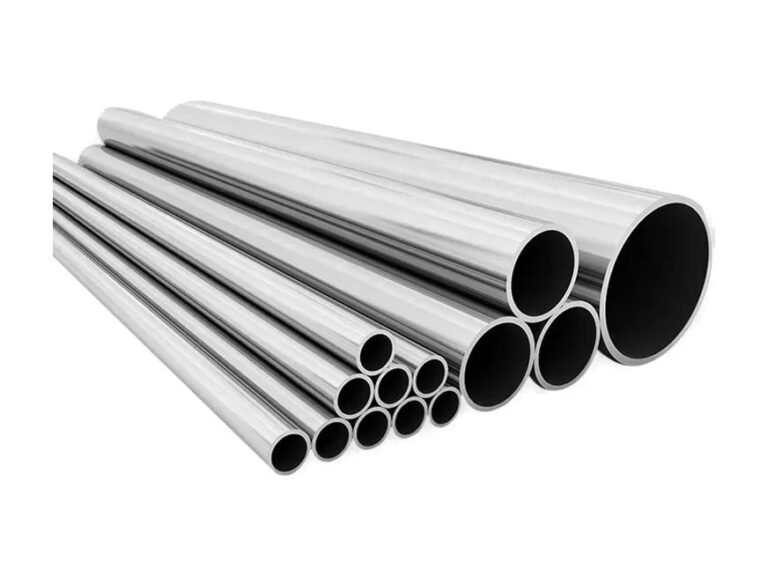
Round Tubes
Welded and seamless round tube
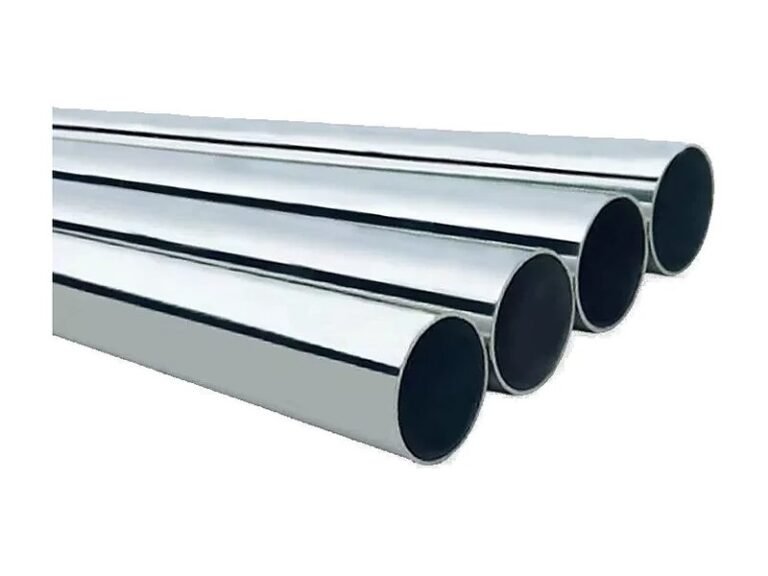
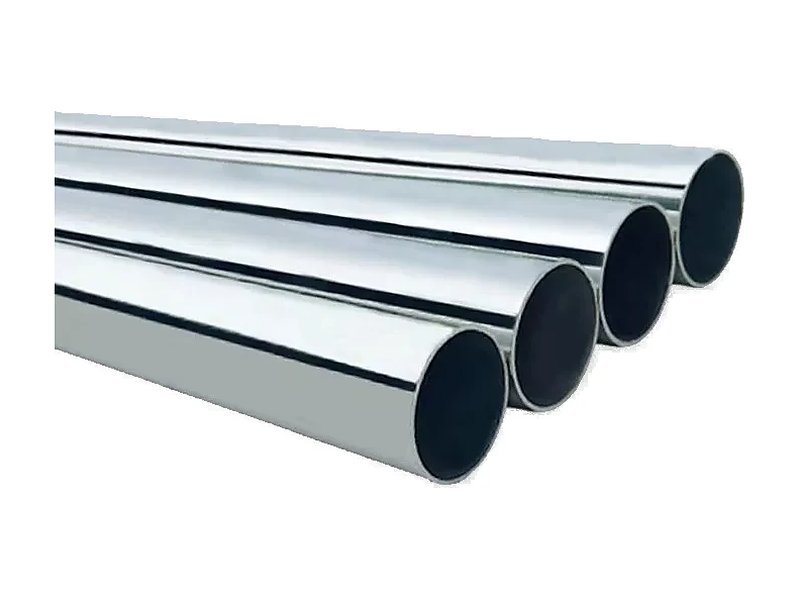
Sanitary Tubes
Polished tubing for hygienic lines
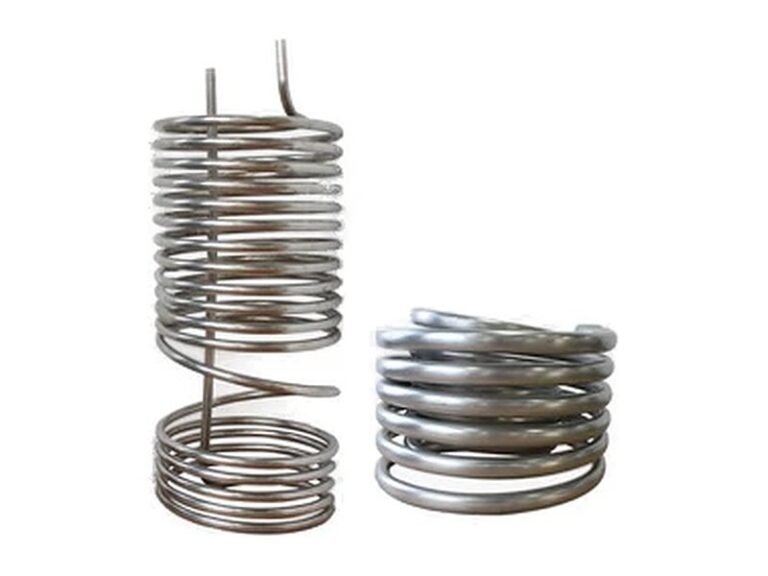
Helical Coils
Spiral coils for round, agitated tanks
Which grade for which application
| Application | Usual grade | Why |
|---|---|---|
| Indoor architecture, kitchen equipment, furniture | 304 (201 or 430 for low-cost indoor decorative sheet) | Good appearance and corrosion resistance indoors |
| Coastal architecture, handrails near the sea | 316/316L with a smooth finish | Chloride-laden air causes pitting and tea staining on 304 |
| Food and beverage processing | 304/304L. 316L for salty or acidic products and aggressive cleaning | Cleanable surface. Molybdenum where chlorides or acids are present |
| Pharmaceutical and biotech | 316L, often electropolished | Low carbon for welded systems, better corrosion margin |
| Hot water tanks and heating coils | 304/304L. 316L or 2205 where chloride levels are higher | Chloride stress corrosion cracking risk rises with temperature |
| Seawater, desalination, offshore | 2205 or 2507 duplex | Higher PREN and resistance to chloride stress corrosion cracking |
| High-temperature service, exhaust, furnaces | 321, 310S | Stabilized or higher-alloy grades for heat resistance |
Other grades in our range
- 201: lower-nickel austenitic grade for indoor decorative sheet and tube.
- 430: ferritic, magnetic grade for appliances and indoor trim.
- 321: titanium-stabilized grade for elevated temperatures.
- 310S: high-chromium, high-nickel grade for heat resistance.
- 2205 and 2507: duplex grades with higher strength and chloride resistance. See duplex pipes.
- 904L: highly alloyed austenitic grade for aggressive acids.
How to specify the grade on an order
- Name the product standard and grade, for example ASTM A312 TP316L or ASTM A240 Type 304.
- Add the UNS number (S30403, S31603) to avoid confusion between standards.
- State whether dual certification is required, for example 304/304L.
- Add any extra tests, such as intergranular corrosion testing to ASTM A262 Practice E or PMI.
- Ask for EN 10204 3.1 certificates showing the heat number, chemistry and mechanical results.
Why source from Yuhang Metal
- Stainless steel supplier based in Foshan, Guangdong, since 1986. In 1988 we commissioned China’s first stainless steel high-frequency welded pipe mill.
- Pipes, tubes, sheets and tube coils in 304/304L and 316/316L, plus 201, 430, 321, 310S, 2205, 2507 and 904L depending on the product.
- Dual-certified 304/304L and 316/316L material, with EN 10204 3.1 certificates and PMI testing available.
Frequently asked questions
Is 316 stainless steel better than 304?
316 is more corrosion resistant than 304 because it contains 2–3% molybdenum, which improves resistance to pitting and crevice corrosion in chlorides. For indoor, potable water and most food applications 304 performs well and costs less, so 316 is only better where chlorides or certain chemicals are present.
Can 304 stainless steel be used near the sea?
304 tends to pit and tea-stain in coastal air, especially without regular washing. For coastal and marine atmospheres, 316/316L with a smooth finish is the usual minimum, and duplex grades are used for seawater contact.
What does the L in 304L and 316L mean?
L means low carbon: 0.030% maximum. Low carbon reduces chromium carbide precipitation in the heat-affected zone of welds, which protects against intergranular corrosion in welded parts that are not annealed afterwards.
How can I tell 304 from 316?
Not with a magnet. Use positive material identification (PMI). A handheld XRF analyser detects molybdenum, which is present in 316 (2–3%) but not in 304. Always check the heat number and chemistry on the mill certificate as well.
Is 304 or 316 food grade?
Both are widely used for food contact. 304 is standard for most food equipment. 316/316L is chosen for salty, acidic or high-chloride products and where aggressive cleaning chemicals are used.
References
- ASTM A240/A240M – Chromium and chromium-nickel stainless steel plate, sheet and strip
- ASTM A312/A312M – Austenitic stainless steel pipes
- ASTM A262 – Detecting susceptibility to intergranular attack in austenitic stainless steels
- ASTM E1476 – Metals identification, grade verification and sorting (PMI)