
By Yuhang Metal Technical Team · Updated November 2026 · 6 min read
Short answer: Seamless pipe has no weld seam and is preferred for high pressure, high temperature, heavy walls and cyclic service. Welded stainless pipe, solution annealed and tested to ASTM A312, suits most water, food and general process duties, with a more uniform wall, smoother bore, lower cost and shorter lead time. Check first whether your project specification makes seamless mandatory.
“Seamless or welded?” is one of the first decisions when buying stainless steel pipe. Both are covered by the same main specification, ASTM A312, and both can be made in the same grades. They differ in how they are made, and that affects pressure design, dimensional tolerances, surface, size range, cost and lead time. This guide explains the differences and when each is the right choice.
Key takeaways
- Seamless pipe is made from a pierced solid billet and has no weld seam. Welded pipe is formed from strip or plate and welded along its length.
- Under ASME B31.3, seamless pipe has a longitudinal weld joint quality factor of 1.0. Welded pipe has a factor between 0.80 and 1.0, depending on the weld type and the extent of radiography.
- Welded pipe usually has a more uniform wall and a smoother bore, costs less and is available faster, in larger diameters.
- Seamless pipe covers heavier walls and is preferred for high-pressure, high-temperature and cyclic service.
- Properly annealed and pickled welded pipe performs well in most corrosive media. For severe service, specify annealing and intergranular corrosion testing.
Contents
- How seamless stainless steel pipe is made
- How welded stainless steel pipe is made
- Seamless vs welded: side-by-side comparison
- Is welded pipe as corrosion resistant as seamless?
- Related products
- When to choose seamless pipe
- When to choose welded pipe
- Testing and inspection
- How to specify on your order
- Why source from Yuhang Metal
- Frequently asked questions
- References
How seamless stainless steel pipe is made
- A solid round billet is heated and pierced, by rotary piercing or hot extrusion, to form a hollow shell.
- The hollow is reduced to the final size by cold drawing or cold pilgering, often in several passes with intermediate annealing.
- The pipe is solution annealed, pickled, straightened, cut to length and tested.
How welded stainless steel pipe is made
- Cold-rolled stainless strip is slit to width and roll-formed into a tube.
- The seam is fusion welded, usually by TIG, plasma or laser without filler metal. Large diameters are formed from plate and welded with filler (electric fusion welded, EFW).
- The weld bead is worked and the pipe is solution annealed, either in-line or in a furnace, then sized, straightened, pickled or bright annealed, and tested.
Seamless vs welded: side-by-side comparison
| Factor | Seamless pipe | Welded pipe |
|---|---|---|
| Weld seam | None | Longitudinal weld, annealed |
| Pressure design (ASME B31.3 joint factor) | 1.0 | 0.80–1.0, depending on weld type and radiography |
| Wall uniformity | Some wall variation (eccentricity) from piercing | Very uniform, from rolled strip |
| Bore surface | Depends on drawing and finishing | Smooth, from cold-rolled strip |
| Heavy walls and small bores | Well suited | Limited by strip thickness and forming |
| Large diameters | Limited and costly | Readily available, including EFW from plate |
| Cost and lead time | Higher, longer | Lower, shorter |
| Typical standards | ASTM A312, A213, A269, A790 | ASTM A312, A358, A778, A249, A269 |
| Our size range | OD 6–273 mm, wall 0.5–25 mm, Sch 5S–XXS | NPS 1/8″–30″ (OD 10.3–762 mm), wall 0.5–20 mm |
Is welded pipe as corrosion resistant as seamless?
For most environments, yes, provided the pipe is solution annealed after welding and properly pickled or bright annealed. Annealing dissolves carbides and homogenises the weld structure, so the weld zone behaves close to the parent metal. Unannealed welded pipe, such as ASTM A778, is intended only for low- and moderate-temperature corrosive service where annealing is not needed. For severe media, specify annealed pipe in an L grade and intergranular corrosion testing to ASTM A262 Practice E. Compare grades in our 304 vs 316 guide.
Related products

Seamless Pipes
ASTM A312 / A213 / A269 / A790
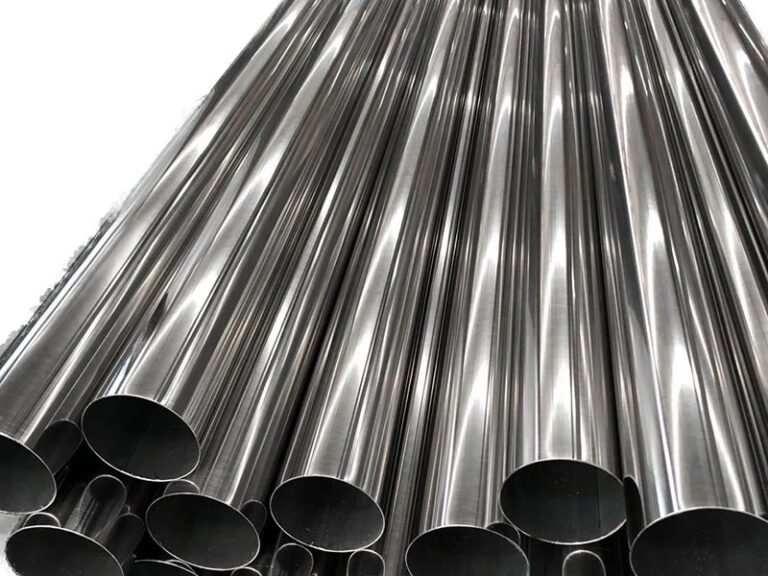
Welded Pipes
ASTM A312 / A358 / A778, NPS 1/8″–30″
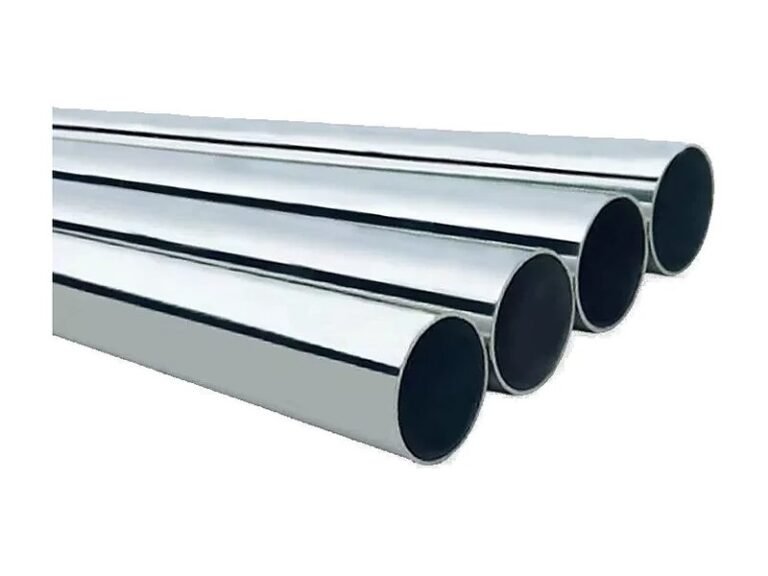
Sanitary Tubes
Polished tubing for hygienic lines
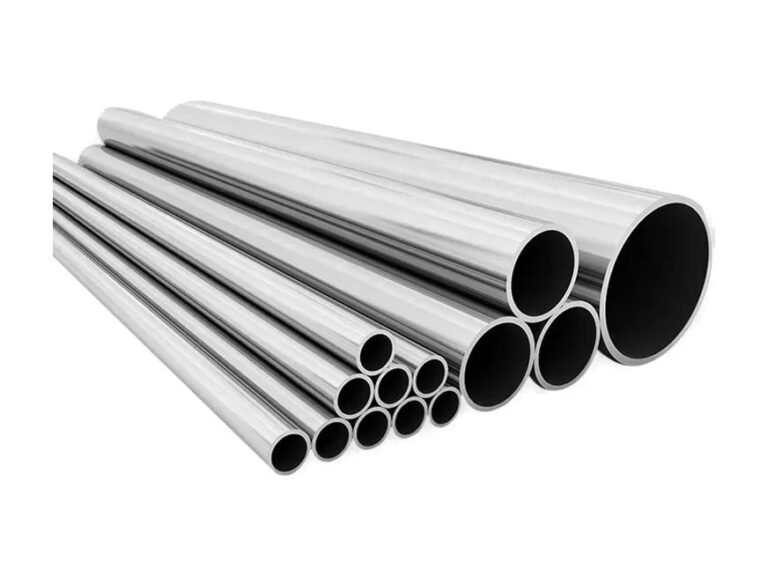
Round Tubes
Welded and seamless round tube
When to choose seamless pipe
- High-pressure or high-temperature lines where the full allowable stress is needed without radiography
- Heavy walls (Sch 80S, 160 and XXS) and small-bore, thick-wall instrumentation lines
- Cyclic or fatigue loading, and hydraulic systems
- Projects whose piping specification requires seamless pipe, as many oil and gas and power specifications do
When to choose welded pipe
- Water, food and beverage, pharmaceutical and general process piping
- Large diameters, and thin walls such as Sch 5S and 10S
- Applications that need a smooth, uniform bore or tight wall tolerance
- Cost-sensitive projects and short delivery times
Testing and inspection
- Both: ASTM A312 requires each length to be hydrostatically tested or examined by a non-destructive electric test such as eddy current, plus flattening and other mechanical tests.
- Welded pipe: radiography (X-ray) of the weld can be specified. Under ASTM A358, the pipe class defines the extent of radiography.
- Seamless pipe: ultrasonic examination is often specified for heavy walls and critical service.
- Either: PMI, intergranular corrosion testing and third-party inspection can be added on the order.
How to specify on your order
- Standard and grade, for example ASTM A312 TP316L, and seamless or welded
- NPS and schedule, or OD × wall
- Length, end finish (plain, beveled, threaded) and surface (pickled, bright annealed, polished)
- Extra tests: radiography, ultrasonic, PMI, ASTM A262 Practice E
- Certificates: EN 10204 3.1 or 3.2
Compare the ASTM specifications in detail in our pipe and tube standards guide, and check weights in the pipe weight chart.
Why source from Yuhang Metal
- Stainless steel supplier based in Foshan, Guangdong, since 1986. In 1988 we commissioned China’s first stainless steel high-frequency welded pipe mill.
- Welded pipe from NPS 1/8″ to 30″ (TIG, plasma, laser or EFW, with the weld bead annealed) and seamless pipe from 6 to 273 mm OD.
- Hydrostatic and eddy current testing, with weld X-ray, ultrasonic, PMI and intergranular corrosion testing available.
- EN 10204 3.1 or 3.2 certificates.
Frequently asked questions
Is seamless pipe stronger than welded pipe?
The material strength is the same for the same grade and condition. The difference is in pressure design: piping codes such as ASME B31.3 give seamless pipe a weld joint factor of 1.0, while welded pipe may be derated unless the weld is fully radiographed.
Can welded stainless steel pipe be used for high pressure?
Yes, within the limits of the design code, after applying the appropriate weld joint factor or specifying full radiography. Many process systems use welded ASTM A312 pipe. Some project specifications, however, require seamless pipe above certain pressures or sizes.
Why is welded pipe cheaper than seamless?
Welded pipe is formed continuously from cold-rolled strip, with high material yield and fast production. Seamless pipe needs billet piercing and several cold-working and annealing passes, which add cost and time.
Does ASTM A312 cover both seamless and welded pipe?
Yes. ASTM A312 covers seamless, welded and heavily cold worked austenitic stainless steel pipe. The order must state which type is required.
What sizes of seamless and welded pipe can Yuhang Metal supply?
Welded pipe from NPS 1/8″ to 30″ (OD 10.3–762 mm) with walls of 0.5–20 mm, and seamless pipe from 6 to 273 mm OD with walls of 0.5–25 mm, from Sch 5S to XXS. Larger sizes are available on request.
References
- ASTM A312/A312M – Seamless, welded and heavily cold worked austenitic stainless steel pipes
- ASTM A358/A358M and ASTM A778/A778M
- ASTM A262 – Intergranular attack in austenitic stainless steels
- ASME B31.3 – Process Piping