
By Yuhang Metal Technical Team · Updated November 2026 · 5 min read
Short answer: Duplex 2205 has roughly twice the yield strength of 316L and much better resistance to chloride pitting and chloride stress corrosion cracking (PREN about 35 against about 24). Choose 2205 for seawater, brines, warm chloride-bearing water and where thinner walls save weight. Stay with 316L for cryogenic or above about 300 °C service, and where easy forming and welding matter most.
316L is the default “upgrade” stainless steel for corrosive service. But in seawater, brines and warm chloride-bearing water, 316L can still pit or crack. Duplex 2205 is usually the next step. This guide compares the two grades and shows when the upgrade is worth it.
Key takeaways
- 2205 is a duplex grade with a roughly 50/50 mix of ferrite and austenite. 316L is fully austenitic.
- 2205 has a minimum yield strength of 450 MPa against 170 MPa for 316L (ASTM A240), so walls can often be thinner.
- 2205 resists chloride pitting and stress corrosion cracking much better than 316L (PREN about 35 against about 24).
- 2205 is magnetic, is generally limited to about 300 °C, and needs controlled welding procedures.
- 316L remains the better choice for cryogenic service and for parts that need heavy forming.
Contents
Chemical composition
| Grade (UNS) | C max | Cr | Ni | Mo | N |
|---|---|---|---|---|---|
| 316L (S31603) | 0.030 | 16.0–18.0 | 10.0–14.0 | 2.00–3.00 | 0.10 max |
| 2205 (S32205) | 0.030 | 22.0–23.0 | 4.5–6.5 | 3.0–3.5 | 0.14–0.20 |
| 2205 (S31803) | 0.030 | 21.0–23.0 | 4.5–6.5 | 2.5–3.5 | 0.08–0.20 |
S32205 is the tighter, higher-nitrogen version of the original S31803. Material is often dual-certified to both.
Mechanical properties
| Grade | Tensile strength, min (MPa) | Yield strength, min (MPa) | Elongation, min (%) |
|---|---|---|---|
| 316L | 485 | 170 | 40 |
| 2205 (S32205) | 655 | 450 | 25 |
Values are ASTM A240 minimums for annealed plate, sheet and strip. The higher strength of 2205 allows thinner walls for the same pressure, which can offset its price per kilogram.
Corrosion resistance
- Pitting and crevice corrosion: PREN = %Cr + 3.3 × %Mo + 16 × %N gives about 35 for 2205 and about 24 for 316L. 2205 tolerates higher chloride levels and temperatures before pitting starts.
- Chloride stress corrosion cracking: austenitic grades such as 316L can crack under tensile stress in warm chloride solutions. The duplex structure of 2205 gives much greater resistance.
- Seawater: 316L is generally not recommended for long-term seawater immersion. 2205 performs better, and super duplex 2507 is used for more demanding seawater service.
Temperature limits
Long exposure to roughly 300–500 °C can embrittle the ferrite in duplex steels, so 2205 is generally limited to about 300 °C in service. At low temperatures, 2205 loses toughness well before 316L does. For cryogenic service, austenitic grades such as 316L are the usual choice.
Related products

Seamless Pipes
ASTM A312 / A213 / A269 / A790
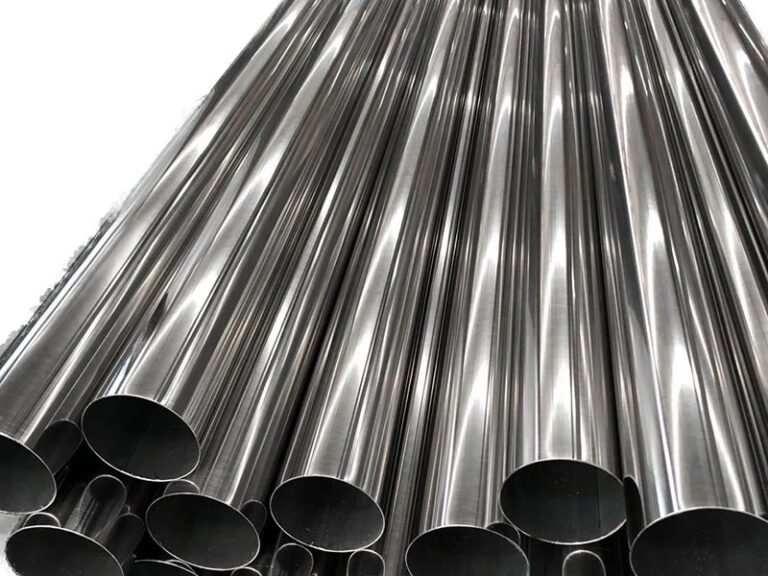
Welded Pipes
ASTM A312 / A358 / A778, NPS 1/8″–30″
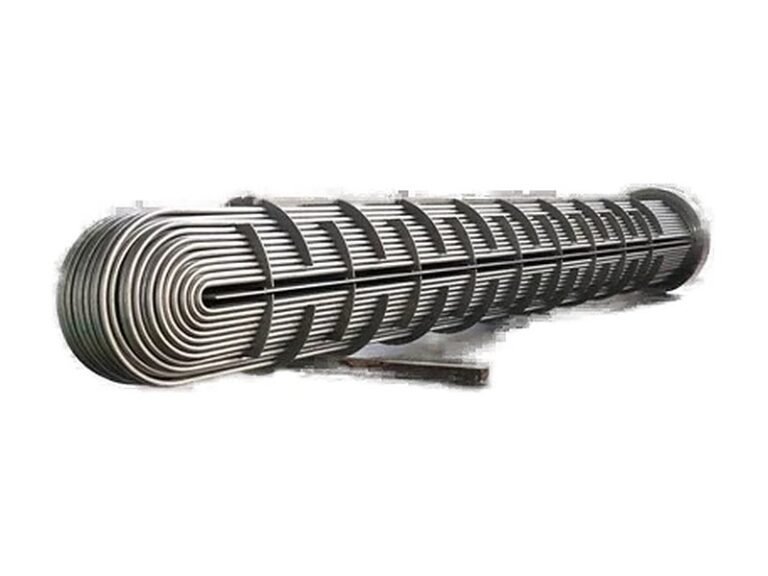
U-Bend Tubes
A213 / A249 / A688, legs up to 15 m
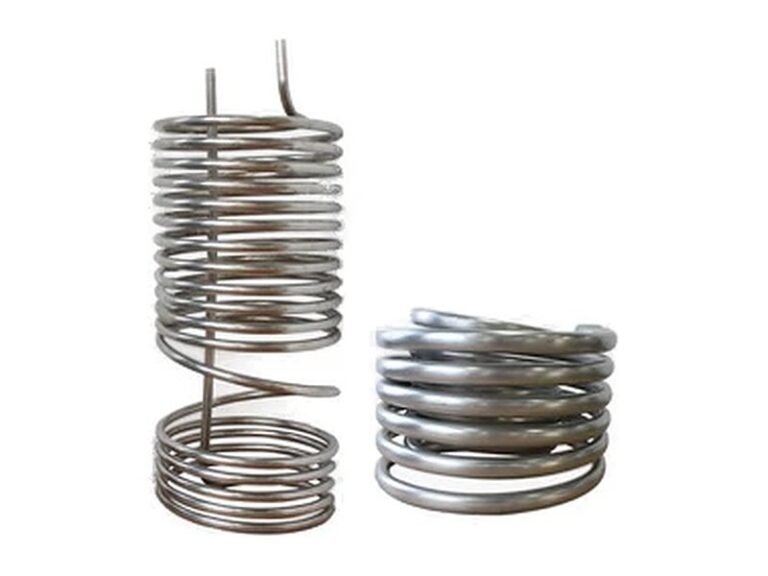
Helical Coils
Spiral coils for round, agitated tanks
Welding and fabrication
- 2205 needs qualified procedures with controlled heat input and interpass temperature, and a matching over-alloyed filler (such as 2209), to keep the ferrite–austenite balance.
- Ferrite content and, for critical service, testing for harmful intermetallic phases (ASTM A923) are often specified.
- 2205 is stronger and springs back more, so bending and forming need more force. 316L is easier to form, roll into coils and weld.
Cost
2205 contains less nickel but more chromium, molybdenum and nitrogen than 316L. Depending on alloy prices, it can be cost-competitive per metre, especially when its higher strength allows a thinner wall. Compare complete quotations for the actual design rather than price per kilogram alone.
Which to choose
| Application | Usual choice |
|---|---|
| Food, pharmaceutical and general process lines | 316L |
| Seawater, desalination and offshore lines | 2205, or 2507 for harsher duty |
| Warm chloride-bearing cooling water and heat exchanger tubes | 2205 |
| Chemical tanks and brine heating coils | 2205 where chlorides cause pitting or cracking in 316L |
| Cryogenic service | 316L or 304L |
| Service above about 300 °C | Austenitic grades such as 316L, 321 or 310S |
Standards for duplex products
- Pipe: ASTM A790. Tube: ASTM A789. Plate, sheet and strip: ASTM A240.
- Forged flanges and fittings: ASTM A182 (F51 / F60). Wrought fittings: ASTM A815.
- Detection of intermetallic phases: ASTM A923.
See also our 304 vs 316 guide and duplex pipes.
Why source from Yuhang Metal
- Stainless steel supplier based in Foshan, Guangdong, since 1986. In 1988 we commissioned China’s first stainless steel high-frequency welded pipe mill.
- Duplex pipe and tube to ASTM A790 and A789 in 2205 and 2507, plus 2205 sheet, U-bend tubes and tube coils.
- EN 10204 3.1 certificates, with PMI and other tests available on request.
Frequently asked questions
Is duplex 2205 better than 316L?
For chloride environments, yes: 2205 has much better resistance to pitting and chloride stress corrosion cracking and about twice the yield strength. 316L is still better for cryogenic service, service above about 300 °C, and parts that need heavy forming.
Is duplex 2205 magnetic?
Yes. About half of its structure is ferrite, so 2205 is magnetic. 316L is essentially non-magnetic when annealed.
Can I replace 316L with 2205 using the same wall thickness?
You can, but you would not use its full strength. Because 2205 has a much higher allowable stress, a thinner wall often meets the same pressure rating. The design should be checked against the applicable code.
What is the difference between S31803 and S32205?
Both are 2205 duplex. S32205 has tighter limits with higher minimum chromium, molybdenum and nitrogen, giving more consistent corrosion resistance. Material is often dual-certified S31803/S32205.
Which standard covers duplex stainless steel pipe?
ASTM A790/A790M covers seamless and welded duplex pipe, and ASTM A789/A789M covers duplex tubing.
References
- ASTM A240/A240M – Stainless steel plate, sheet and strip
- ASTM A790/A790M and A789/A789M – Duplex stainless steel pipe and tubing
- ASTM A923 – Detecting detrimental intermetallic phase in duplex stainless steels
- ASTM A182/A182M and A815/A815M – Flanges and fittings