Category: Technical Guides

Technical guides on stainless steel pipes, tubes, sheets and tube coils from the Yuhang Metal engineering team.

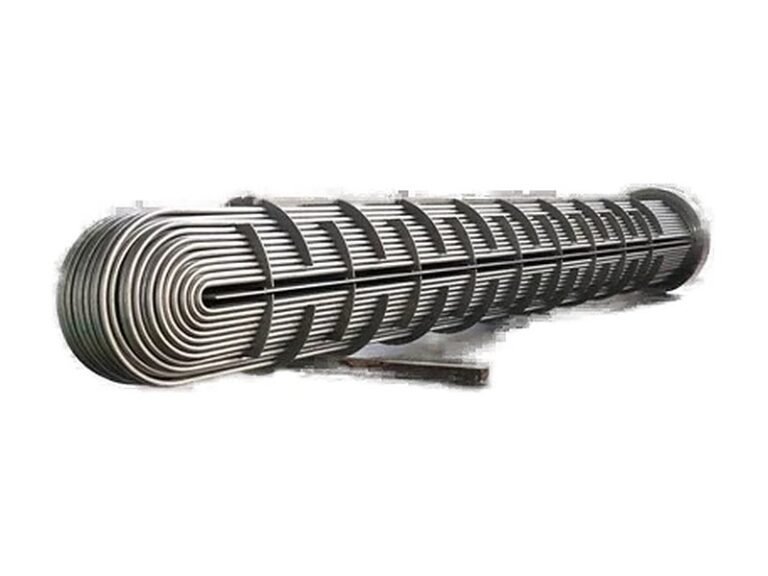
  • How to Specify U-Bend Heat Exchanger Tubes: Standards, Bend Radius, Ovality, Wall Thinning and Testing

    How to Specify U-Bend Heat Exchanger Tubes: Standards, Bend Radius, Ovality, Wall Thinning and Testing

    By Yuhang Metal Technical Team · Updated November 2026 · 8 min read

    Short answer: Order U-tubes to ASTM A213, A249 or A688 and specify the tube OD and minimum wall, a U-bend schedule (radius, leg length and quantity per row), whether bends are heat treated, and pressure testing after bending. ASTM A688 limits ovality to 10% of OD for bends of 2 × OD and larger, and sets the minimum bent wall as tf = 4RT / (4R + D).

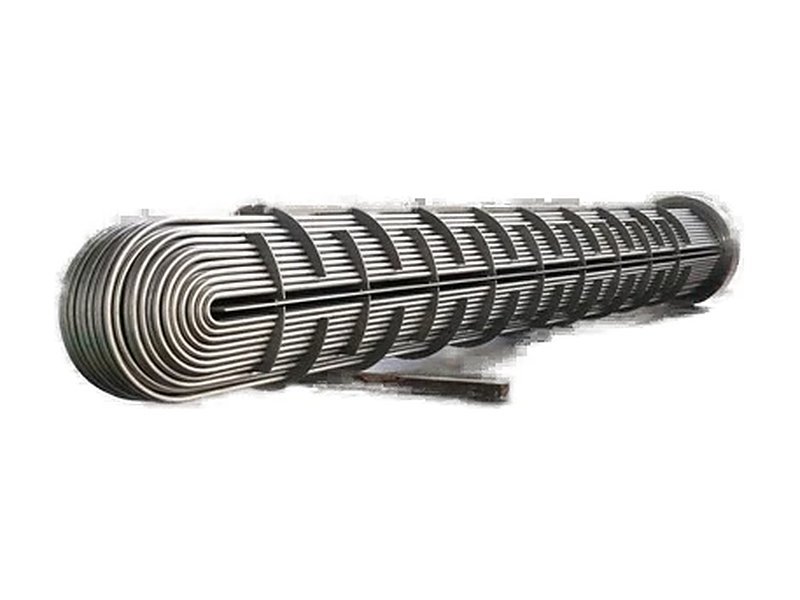
    U-tube heat exchangers and feedwater heaters use tubes bent into a hairpin and expanded or welded into a single tubesheet. Each tube is free to expand on its own, so the design copes well with thermal expansion and needs no floating head. The catch is that the bend is the most heavily worked part of the tube. Cold bending thins the outer wall, flattens the tube slightly and leaves residual stress. A good U-bend specification controls all three.

    Key takeaways

    • Order the straight tube to a heat-exchanger specification: ASTM A213 (seamless), A249 (welded), A688 (austenitic feedwater heater tubes), A803 (welded ferritic feedwater heater tubes) or A789 (duplex).
    • For bends with a centreline radius of 2 × OD or more, ASTM A688 limits ovality to 10% of the nominal OD. Tighter bends may need agreed, wider tolerances.
    • A688 sets the minimum wall in the bend as tf = 4RT / (4R + D). Tight radii thin the wall more, so they may need a heavier starting wall.
    • State whether the bends must be heat treated, and how every U-tube is to be pressure tested after bending.
    • Send a U-bend schedule listing radius, leg length and quantity for each row.

    Step 1: Choose the base tube specification

    SpecificationProductTypical application
    ASTM A213/A213MSeamless ferritic and austenitic alloy-steel boiler, superheater and heat-exchanger tubesHigh-pressure or high-temperature exchangers
    ASTM A249/A249MWelded austenitic boiler, superheater, heat-exchanger and condenser tubesGeneral shell-and-tube exchangers and condensers
    ASTM A688/A688MSeamless and welded austenitic stainless steel feedwater heater tubes, U-bent when specifiedFeedwater heaters and U-tube bundles
    ASTM A803/A803MWelded ferritic stainless steel feedwater heater tubes, such as TP439Feedwater heaters where ferritic grades are preferred
    ASTM A789/A789MSeamless and welded duplex stainless steel tubingChloride-bearing cooling water and process fluids
    EN 10216-5 / EN 10217-7European seamless / welded stainless steel tubes for pressure purposesProjects specified to EN standards

    These tube specifications call up the general requirements of ASTM A1016. Work under the ASME Code uses the SA- versions, such as SA-213, SA-249 and SA-688.

    Stainless steel u-bend tubes

    U-Bend Tubes
    A213 / A249 / A688, legs up to 15 m
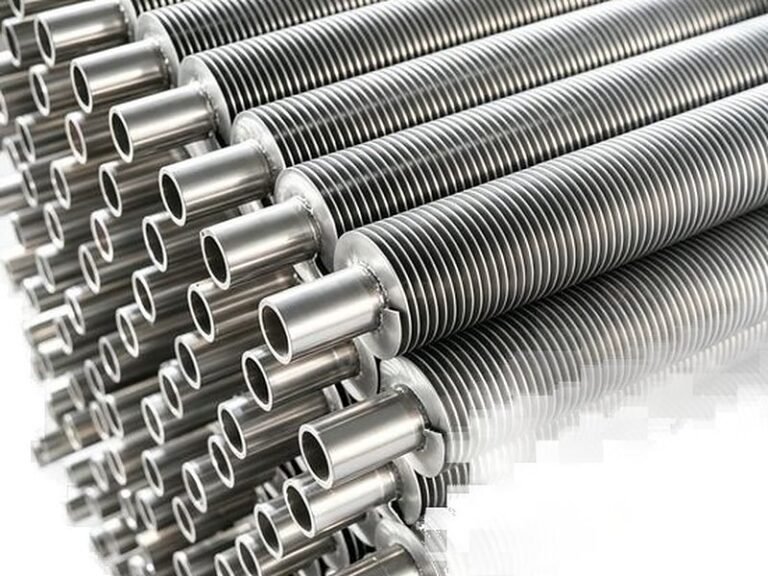
    Stainless steel finned tubes

    Finned Tubes
    Extended-surface heat-exchange tubes
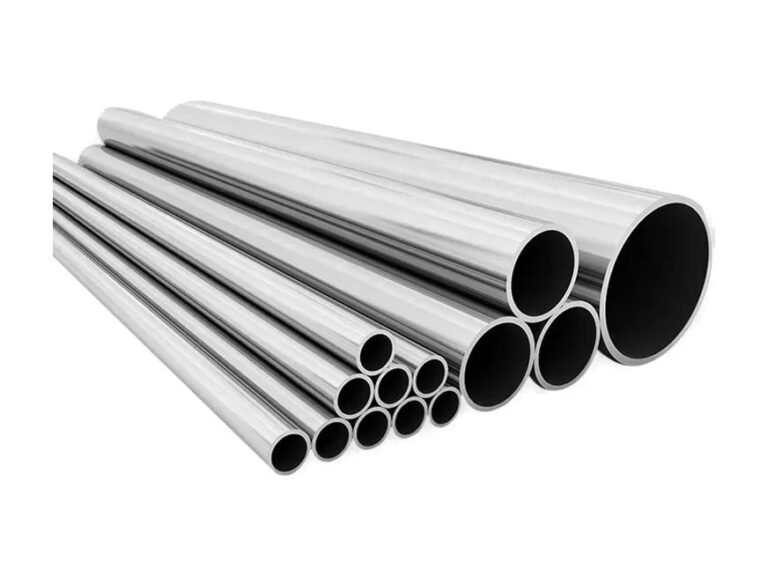
    Stainless steel round tubes

    Round Tubes
    Welded and seamless round tube

    Step 2: Bend radius

    The centreline bend radius (R) is measured to the tube axis. The tightest bend sits in the innermost row of the bundle, and each row outward has a larger radius. The tightest practical radius depends on tube OD, wall thickness, grade and bending method. Mandrel bending is used for tight radii. A tight radius of about 1.5 × OD is a common practical starting point. Note, however, that the ASTM A688 ovality limit below applies only to bends of 2 × OD and larger. If your innermost rows are tighter than that, agree the ovality and thinning acceptance values with the manufacturer at the enquiry stage.

    Step 3: Wall thinning in the bend

    When a tube is bent, the outside of the bend (the extrados) stretches and thins, while the inside (the intrados) thickens. ASTM A688 sets the minimum wall thickness in the bent portion as:

    tf = 4RT / (4R + D). Here T is the minimum wall thickness of the straight tube, R the centreline bend radius and D the nominal OD.

    Worked example for a 19.05 mm OD tube with a 1.24 mm minimum wall:

    Centreline radius RMinimum wall in bend tfReduction
    1.5 × OD = 28.6 mm1.06 mm≈ 14%
    3 × OD = 57.2 mm1.14 mm≈ 8%

    If your pressure design needs a set minimum wall in the bend, work backwards: T = tf × (4R + D) / 4R. Then order the innermost rows with that heavier wall, or use a larger radius.

    Step 4: Ovality and other U-bend tolerances

    For a centreline bend radius of 2 × D or greater, ASTM A688 requires that the major and minor diameters in the bend do not deviate from the nominal OD by more than 10%. For a 19.05 mm tube, that is roughly 17.1–21.0 mm. A688 also sets the following tolerances. The figures are from the 2015 edition, so check the edition named on your order.

    ItemASTM A688 requirement
    Leg lengthNever shorter than specified. Plus tolerance of 1/8 in (3.2 mm) up to 20 ft, 5/32 in (4.0 mm) over 20–30 ft, and 3/16 in (4.8 mm) over 30–40 ft
    Difference between the two legsNot more than 1/8 in (3 mm) unless otherwise specified
    Leg spacing (2R − OD)±1/16 in (1.5 mm) of nominal
    Plane of bendDeviation not more than 1/16 in (1.5 mm), measured from the points of tangency
    Bend curvatureSubstantially uniform

    Step 5: Heat treatment of the bend

    Cold bending work-hardens the bend and leaves residual stress. That raises the risk of stress corrosion cracking in chloride or caustic service, so many purchasers require the bends to be heat treated, at least on the tightest rows. Where U-bend heat treatment is specified, ASTM A688 requires:

    • Solution annealing at 1040 °C (1900 °F) minimum, followed by rapid cooling
    • Treatment of the bend plus about 150 mm (6 in) of each leg beyond the tangent point
    • Temperature control by optical or emission pyrometer, with no temperature-indicating crayons or lacquers
    • An inert or protective gas purge inside the tube until it has cooled below 370 °C (700 °F)
    • Inspection of electrode contact areas for arc burns when resistance heating is used

    State on the U-bend schedule which rows need heat treatment, for example all bends below a given radius.

    Step 6: Testing and cleanliness

    • After bending: ASTM A688 requires every U-tube to be pressure tested after bending and after any heat treatment of the bend. This can be a hydrostatic test, or a pneumatic test (air underwater or pneumatic leak test) as the purchaser specifies.
    • Straight tube: eddy current testing before bending, with ultrasonic thickness checks and ovality measurement on sample bends.
    • Cleanliness: bending lubricant must be removed. A688 checks inside cleanliness by blowing acetone-soaked felt plugs through 10% of the tubes of each bend radius.
    • Test water: use low-chloride water for hydrostatic tests of austenitic tubes, then drain and dry them.

    What to include in a U-bend tube enquiry

    1. Specification and grade, for example ASTM A688 TP304L or A213 TP316L
    2. Tube OD × minimum or average wall, and wall for any tight inner rows
    3. U-bend schedule: row number, centreline radius, leg length and quantity per row
    4. Heat treatment of bends: which rows, and the method
    5. Test method after bending (hydrostatic or pneumatic) and NDE on straight tube
    6. End finish, cleanliness, packing (supported by row in wooden cases) and EN 10204 3.1 certificates

    See our U-bend tubes and other stainless steel pipes and tubes, read the ASTM pipe and tube standards comparison, or send us your U-bend schedule for a quotation.

    Why source from Yuhang Metal

    • Stainless steel supplier based in Foshan, Guangdong, since 1986. In 1988 we commissioned China’s first stainless steel high-frequency welded pipe mill.
    • U-bend tubes from 9.52 to 38.1 mm OD and 0.7–3.0 mm wall, with leg lengths up to 15 m and bend radii from 1.5 × OD.
    • Hydrostatic testing after bending, eddy current testing, and ovality and thinning checks on the bends. Stress relieving of the bend area is available on request.
    • EN 10204 3.1 certificates.

    Frequently asked questions

    What is the minimum bend radius for stainless steel U-tubes?

    It depends on tube OD, wall thickness, grade and bending method. A tight radius of about 1.5 × OD is a common practical starting point. The ASTM A688 ovality limit of 10% applies only to bends of 2 × OD or larger, so tolerances for tighter bends should be agreed with the manufacturer.

    How much does the wall thin in a U-bend?

    ASTM A688 sets the minimum wall in the bend as tf = 4RT / (4R + D). For a 19.05 mm OD tube with a 1.24 mm minimum wall, that is about 1.06 mm at 1.5 × OD radius (around 14% thinner) and 1.14 mm at 3 × OD radius (around 8% thinner).

    Do U-bends need heat treatment?

    Not always, but it is common for tight bends in chloride or caustic service, where residual stress from cold bending increases the risk of stress corrosion cracking. When specified under ASTM A688, the bend and about 150 mm of each leg are solution annealed at 1040 °C minimum and rapidly cooled.

    Are U-tubes pressure tested after bending?

    Under ASTM A688, every U-tube is pressure tested after bending and after any heat treatment of the bend, by a hydrostatic or pneumatic test as specified by the purchaser.

    Can welded tubes be U-bent?

    Yes. ASTM A688 covers both seamless and welded austenitic feedwater heater tubes bent into U-tubes, and welded A249 tubes are also widely used in U-tube bundles. The tube must meet the specification’s tests before bending.

    What is leg spacing on a U-tube?

    Leg spacing is the gap between the two legs, equal to twice the centreline radius minus the tube OD (2R − OD). ASTM A688 allows ±1/16 in (1.5 mm) on the nominal value.

    What sizes of U-bend tube can Yuhang Metal supply?

    We supply U-bend tubes from 9.52 to 38.1 mm OD with 0.7–3.0 mm wall, leg lengths up to 15 m, and bend radii from 1.5 × OD, in grades including 304/304L, 316L, 321, 439, 2205, 2507 and 904L.

    References

    • ASTM A688/A688M – Seamless and welded austenitic stainless steel feedwater heater tubes
    • ASTM A213/A213M, A249/A249M, A803/A803M, A789/A789M
    • ASTM A1016/A1016M – General requirements for ferritic alloy, austenitic alloy and stainless steel tubes
    • EN 10216-5 and EN 10217-7
  • Stainless Steel Pipe and Tube Standards Compared: ASTM A312, A269, A249, A213, A554, A270, A790, A358, A688 and A778

    Stainless Steel Pipe and Tube Standards Compared: ASTM A312, A269, A249, A213, A554, A270, A790, A358, A688 and A778

    By Yuhang Metal Technical Team · Updated November 2026 · 8 min read

    Short answer: Use ASTM A312 for stainless process pipe, A269 for general-service tubing, A213 (seamless) or A249 (welded) for heat-exchanger tubes, A688 for feedwater heater U-tubes, A270 for sanitary tubing, A554 for mechanical and decorative tubing, and A790 for duplex pipe. Pipe is ordered by NPS and schedule; tube by actual OD × wall.

    Ordering stainless steel pipe or tube to the wrong specification is one of the most common reasons for rejected shipments. The standard is not only a quality label. It defines whether the product is seamless or welded, how it is heat treated, which tests are carried out on every length, the dimensional tolerances, and the service it is intended for. This guide compares the ASTM specifications buyers meet most often, and shows how to pick the right one.

    Key takeaways

    • Pipe (A312, A358, A778, A790) is ordered by nominal pipe size (NPS) and schedule. Tube (A269, A249, A213, A688, A270, A554) is ordered by actual outside diameter × wall thickness.
    • A312 is the general specification for stainless pressure pipe. A358 covers electric-fusion-welded pipe made from plate, usually in large diameters. A778 covers unannealed welded pipe for low- to moderate-temperature corrosive service.
    • A213 (seamless) and A249 (welded) cover boiler, superheater and heat-exchanger tubes. A688 covers feedwater heater tubes, including U-bends.
    • A269 is general-service tubing, A270 sanitary tubing and A554 mechanical tubing for structural and decorative use.
    • A790 (pipe) and A789 (tube) are the duplex stainless steel specifications.

    Pipe or tube: why the difference matters

    Pipe is designated by NPS and schedule. For stainless steel the dimensions follow ASME B36.19M with schedules such as 5S, 10S, 40S and 80S. The outside diameter is fixed for each NPS, for example NPS 2 = 60.3 mm OD, and the schedule sets the wall. Pipe specifications such as A312 and A790 call up the general requirements of ASTM A999.

    Tube is ordered by its actual OD and wall thickness, usually with tighter tolerances. It is used for heat exchangers, instruments, hygienic lines and mechanical parts. Heat-exchanger and general-service tube specifications such as A213, A249, A269 and A688 call up the general requirements of ASTM A1016.

    ASTM stainless steel pipe and tube standards compared

    StandardScopeSeamless / weldedTypical useNotes
    ASTM A312/A312MSeamless, welded and heavily cold-worked austenitic stainless steel pipeBothProcess piping for high-temperature and general corrosive serviceSupplied heat treated. Each length is hydrostatically tested or examined by a non-destructive electric test
    ASTM A358/A358MElectric-fusion-welded (EFW) austenitic chromium-nickel stainless steel pipe for high-temperature service and general applicationsWelded (formed from plate)Large-diameter process and transfer pipingFive classes differ in single or double welding, filler metal and the extent of radiography
    ASTM A778/A778MWelded, unannealed austenitic stainless steel tubular productsWelded, not annealedLow- and moderate-temperature corrosive service, such as water treatment, pulp and paper, and ductingCovers 3–48 in (75–1200 mm) OD in L-grades and stabilized grades. Where post-weld heat treatment or radiography is required, the standard refers buyers to A312, A358 or A409
    ASTM A790/A790MSeamless and welded ferritic/austenitic (duplex) stainless steel pipeBothChloride-bearing process lines, offshore, desalinationGrades such as 2205 (S31803/S32205) and 2507 (S32750). The tubing equivalent is A789
    ASTM A269/A269MSeamless and welded austenitic stainless steel tubing for general serviceBothInstrumentation, hydraulic and general corrosion-resistant tubingThe most widely used general-purpose tubing specification
    ASTM A249/A249MWelded austenitic steel boiler, superheater, heat-exchanger and condenser tubesWeldedShell-and-tube heat exchangers, condensersAnnealed tube with flattening, flange and reverse-bend tests on the weld
    ASTM A213/A213MSeamless ferritic and austenitic alloy-steel boiler, superheater and heat-exchanger tubesSeamlessBoilers, superheaters, high-pressure heat exchangersAlso covers ferritic alloy grades such as T11, T22 and T91 alongside TP304, TP316, TP321 and others
    ASTM A688/A688MSeamless and welded austenitic stainless steel feedwater heater tubes, including U-bent tubes when specifiedBothPower-plant feedwater heaters, U-tube exchangersSets U-bend tolerances for ovality, wall thinning, leg length and leg spacing. See our U-bend tube guide
    ASTM A270/A270MSeamless and welded austenitic and ferritic/austenitic stainless steel sanitary tubingBothDairy, food, beverage and pharmaceutical linesPolished inside and outside surfaces. Supplementary requirement S2 covers pharmaceutical-quality tubing. ASME BPE is often specified alongside it
    ASTM A554Welded stainless steel mechanical tubingWeldedHandrails, furniture, automotive, structural and decorative partsRound, square, rectangular and special shapes, intended for mechanical rather than pressure duty
    Stainless steel welded pipes

    Welded Pipes
    ASTM A312 / A358 / A778, NPS 1/8″–30″

    Stainless steel seamless pipes

    Seamless Pipes
    ASTM A312 / A213 / A269 / A790

    Stainless steel sanitary tubes

    Sanitary Tubes
    Polished tubing for hygienic lines

    Stainless steel u-bend tubes

    U-Bend Tubes
    A213 / A249 / A688, legs up to 15 m

    How to choose the right specification

    • Plant piping under pressure: welded or seamless pipe to A312. For large diameters made from plate, A358.
    • Large-diameter, low-pressure corrosive service where annealing is not needed: A778.
    • Chloride environments, or where higher strength is needed: duplex pipe to A790, or tube to A789.
    • Heat-exchanger and condenser tubes: A213 for seamless, A249 for welded. For feedwater heaters and U-bundles, A688. See U-bend tubes.
    • Instrumentation, hydraulic and general tubing: A269. See precision and instrumentation tubes and round tubes.
    • Hygienic process lines: sanitary tubes to A270, plus ASME BPE for pharmaceutical systems.
    • Structural, architectural and decorative parts: mechanical tubes to A554.

    EN and GB counterparts

    Projects in Europe and China often quote EN or GB standards. The documents below are the nearest counterparts, not direct substitutes. Always compare the dimensions, tolerances and test requirements before accepting one in place of another.

    ProductASTMENGB
    Seamless pressure pipe and tubeA312, A213, A269EN 10216-5GB/T 14976 (fluid), GB/T 13296 (boiler and heat exchanger)
    Welded pressure pipe and tubeA312, A358, A249, A269EN 10217-7GB/T 12771 (fluid)
    Welded mechanical and structural tubeA554EN 10296-2GB/T 12770
    Welded tube for food and chemical industryA270EN 10357—

    Dual certification and ASME SA specifications

    Austenitic pipe and tube is often dual-certified, for example 304/304L or 316/316L. Dual certification means the material meets the low-carbon limit of the L grade (0.030% C maximum) and the strength requirements of the standard grade. For work under the ASME Boiler and Pressure Vessel Code, material must be certified to the ASME version of the specification (SA-312, SA-213, SA-249, SA-688 and so on). These are adopted from the ASTM editions and are usually identical in content.

    What to put on your pipe or tube order

    1. Specification and edition year, for example ASTM A312/A312M-24
    2. Grade and UNS number, for example TP316L / S31603
    3. Seamless or welded
    4. Size: NPS and schedule for pipe, or OD × wall (minimum or average) for tube
    5. Length: random, fixed or cut-to-length, with tolerance
    6. End finish (plain, beveled, threaded) and surface (pickled, bright annealed, polished)
    7. Tests: hydrostatic or eddy current, plus any extras such as ultrasonic, PMI or intergranular corrosion testing to ASTM A262 Practice E
    8. Certificates to EN 10204 3.1 or 3.2, with marking and packing requirements

    See our full range of stainless steel pipes and tubes, or send us your specification for a quotation.

    Why source from Yuhang Metal

    • Stainless steel supplier based in Foshan, Guangdong, since 1986. In 1988 we commissioned China’s first stainless steel high-frequency welded pipe mill.
    • Welded pipe from NPS 1/8″ to 30″ to ASTM A312, A358 and A778, and seamless pipe and tube to A312, A213, A269 and A790.
    • Hydrostatic and eddy current testing, with further tests such as ultrasonic, weld X-ray, PMI or intergranular corrosion testing available.
    • EN 10204 3.1 or 3.2 certificates.

    Frequently asked questions

    What is the difference between ASTM A312 and ASTM A269?

    ASTM A312 covers stainless steel pipe ordered by nominal pipe size and schedule for high-temperature and general corrosive service. ASTM A269 covers stainless steel tubing for general service, ordered by actual outside diameter and wall thickness. A312 is used for process piping. A269 is used for instrumentation, hydraulic and general tubing.

    What is the difference between ASTM A213 and ASTM A249?

    Both cover boiler, superheater and heat-exchanger tubes. A213 is for seamless tubes, including ferritic alloy grades such as T11, T22 and T91. A249 is for welded austenitic tubes.

    Can ASTM A554 tubing be used for pressure applications?

    A554 is a mechanical tubing specification intended for structural, architectural and decorative uses. For pressure duty, specify a pressure-rated specification such as A269, A249 or A312.

    What does dual-certified 304/304L mean?

    The material meets the chemistry of 304L, with 0.030% carbon maximum, and the mechanical properties of 304. It can therefore be supplied against orders for either grade.

    Is ASTM A312 the same as ASME SA-312?

    SA-312 is the ASME Boiler and Pressure Vessel Code adoption of ASTM A312 and is usually identical in content. Work under the ASME Code requires material certified to the SA specification.

    Which ASTM standard should I use for heat exchanger tubes?

    Use ASTM A213 for seamless tubes and ASTM A249 for welded tubes. For feedwater heaters and U-tube bundles, ASTM A688 adds U-bend tolerances. For duplex grades, use ASTM A789.

    What is the difference between ASTM A269 and ASTM A270?

    A269 covers stainless steel tubing for general corrosion-resistant and low- or high-temperature service. A270 covers sanitary tubing for the dairy, food and pharmaceutical industries, with polished inside and outside surfaces and an optional pharmaceutical-quality supplementary requirement.

    What tests are carried out on stainless steel pipe?

    Pipe specifications such as A312 require every length to be hydrostatically tested or examined by a non-destructive electric test such as eddy current, plus mechanical tests such as flattening. Extra tests, for example ultrasonic examination, PMI or intergranular corrosion testing to ASTM A262 Practice E, are added on the purchase order.

    References

    • ASTM A312/A312M, A358/A358M, A778/A778M, A790/A790M, A789/A789M
    • ASTM A269/A269M, A249/A249M, A213/A213M, A688/A688M, A270/A270M, A554
    • ASTM A999/A999M and A1016/A1016M (general requirements)
    • ASME B36.19M (stainless steel pipe dimensions)
    • EN 10216-5, EN 10217-7, EN 10296-2, EN 10357; GB/T 14976, GB/T 12771, GB/T 12770, GB/T 13296